First, Let’s Hear What Mr. Staley, Our Principal, Has to Share with DMHS!
Please note that these following responses have been transcribed.
Q : After moving to the new building, what are some new policies you’ve put in place to maintain cleanliness in the bathrooms?
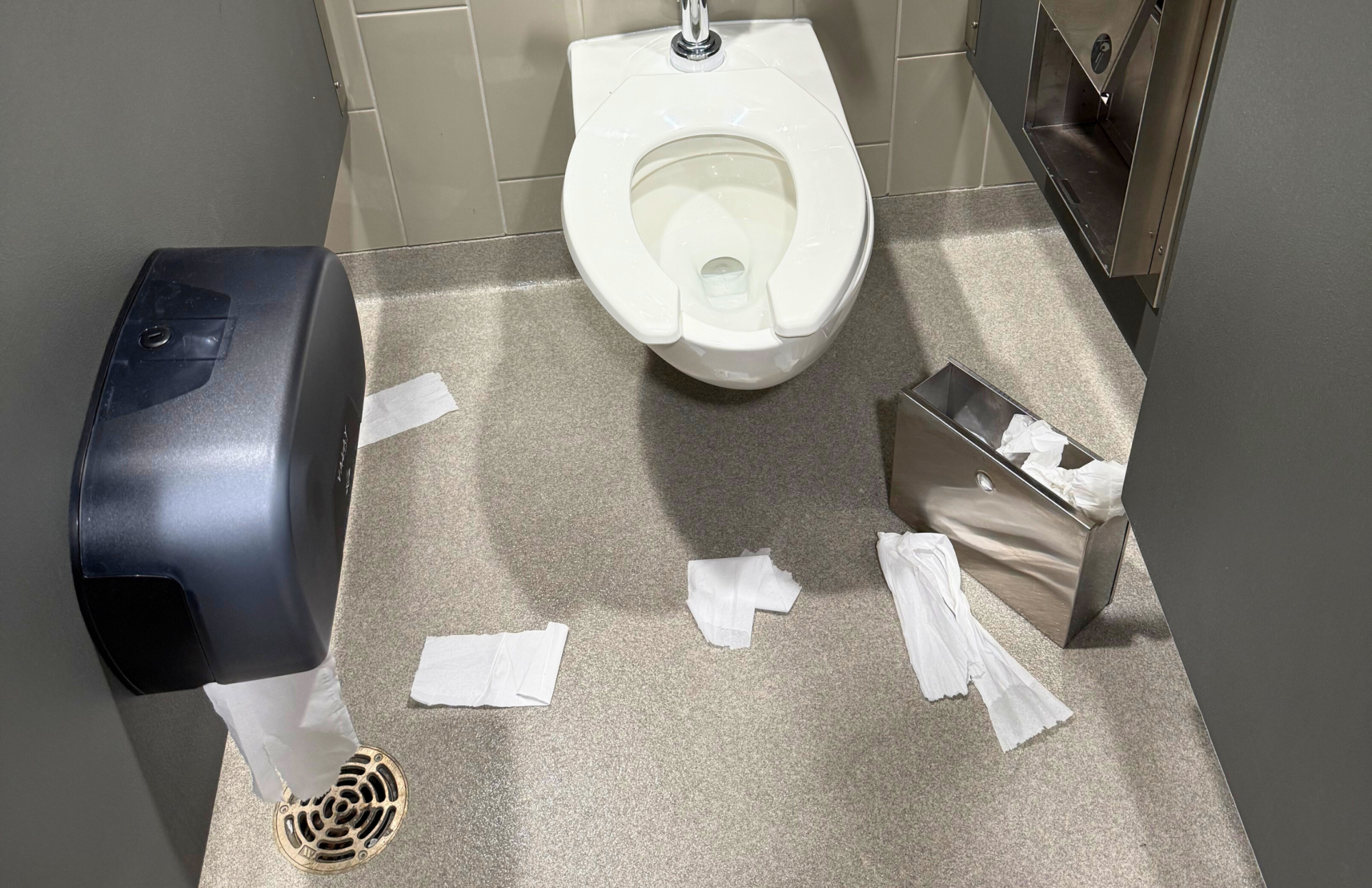
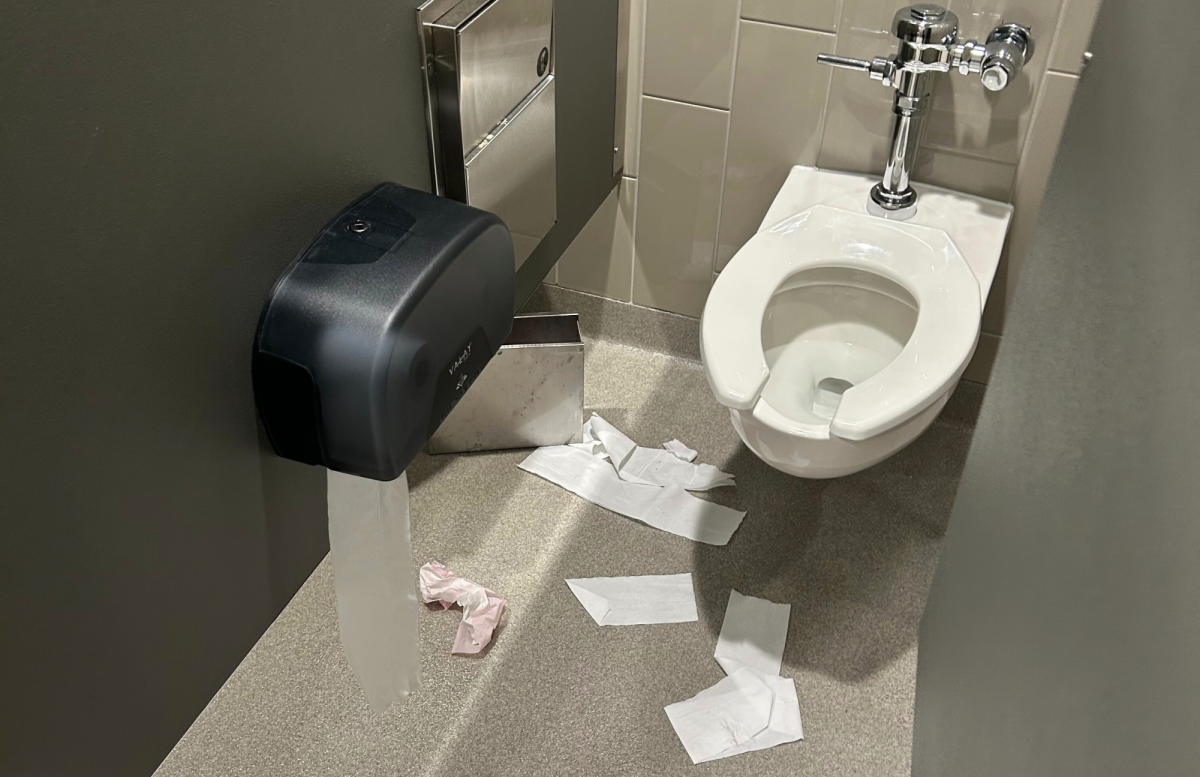
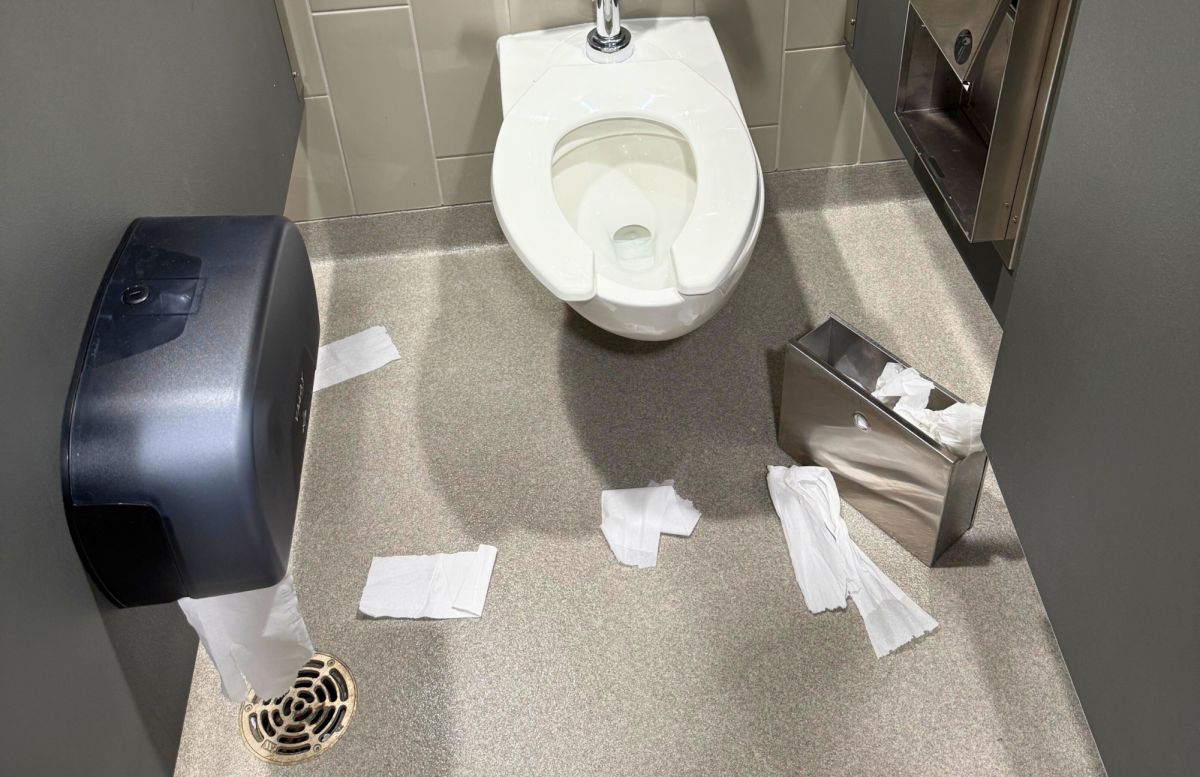
“We’ve maintained some of the policies from last year and we updated them for this building. For example, the use of the color-coded passes which really is just meant to just balance out the number of students going to any given bathroom, is really what it is and also to minimize the time it takes for student to go from their classroom to a bathroom and back to class so that color coded pass system we put in place last year seemed to work well. We’ve put in the bathroom’s signage…basically saying don’t flush inappropriate things and I think there’s still like education that has to take place with that, but we put those in places. The bathrooms should have trash cans. So when we were encountering this problem last year, we brought some students down to kind of get their perspective on what challenges they’re facing which then maybe the reason why things are being flushed inappropriately and how do we solve that problem. So we try to get a student perspective and one of their suggestions was the idea of like the trash cans in the bathrooms so those should be up there, and I hope they still are. So, I don’t think there’s anything really new, we just kind of cleaned up our policies and obviously updated the bathroom passes and things of that nature but, we’re willing to explore other options if we think it’s going to resolve the issue for everyone.” – Mr. Staley, DMHS’s Principal.
Q : What are the priorities of the bathroom duty staff?
“Due to some students choices this year, we’re asking them to be more diligent in checking for damage – graffiti, things like that. The unfortunate reality is some students go in the bathroom and cause damage which is frustrating for really all the other students who need to use the bathroom and they just want to go there and back to class, so it’s really a punishment to those other students. We’ve seen a few instances this year that have forced us to try to tackle that problem so the people on bathroom duty are asked to check periodically throughout their shift so that narrows the number of students who may have caused that damage to a smaller group where then the admin can investigate and assign consequences if we find out who did it. We just asked them to maintain order, again a few kids in at a time, the idea of the bathroom passes, it’s really just student accountability and hoping that students can move in and out quickly.” – Mr. Staley, DMHS’s Principal.
Q : How many bathrooms are open at a time? Are bathrooms open during after school activities?
“Generically, there are three student bathrooms open that are spread throughout the building. During lunch, we also open up a bathroom for the students who are at lunch so they are not walking through the hall, it’s closer to where they are is the idea. After school, yes, the bathrooms are open, typically it’s the students in the locker rooms and athletic spaces and are open for them to use. If there are events after school that are teacher focused, for example, if a teacher is running a club, or if a student is there for extra help, or if there is a permitted event, then the bathrooms are open. For example, if a club is after school, often the teacher will monitor because all the teachers have a key to the bathrooms – it’s a universal key – so teachers typically will monitor the students going and locking it behind them.” – Mr. Staley, DMHS’s Principal.
Q : How often are the sanitary bins in the bathrooms replaced?
“They should be replaced at a minimum daily and if they are full, then all the bathroom monitors have a walkie-talkie to alert the custodians, admin, whomever, if something needs to be addressed so if those are full then they can just be alerted to come up and replace them. So the idea being we’ve given them walkie talkies – so I guess that’s a new policy – so we can respond more immediately to needs.” – Mr. Staley, DMHS’s Principal.
Q : Can you tell me more about the vape situation in the bathrooms?
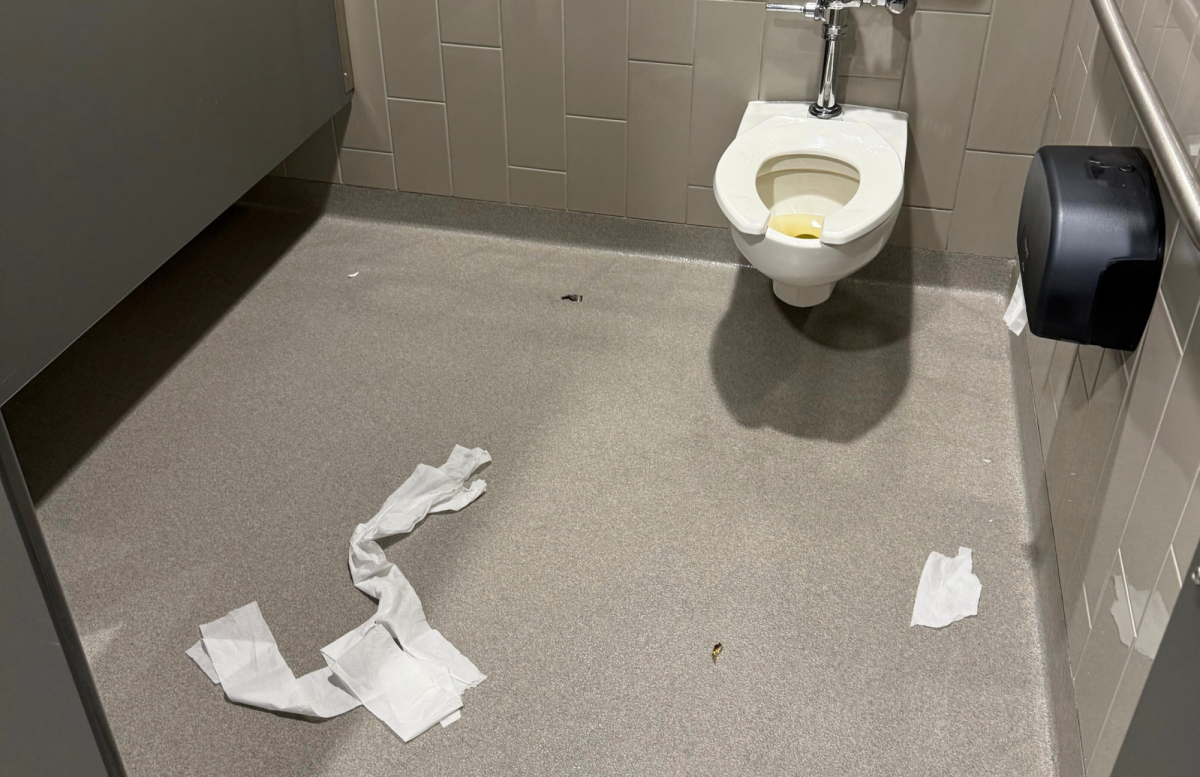
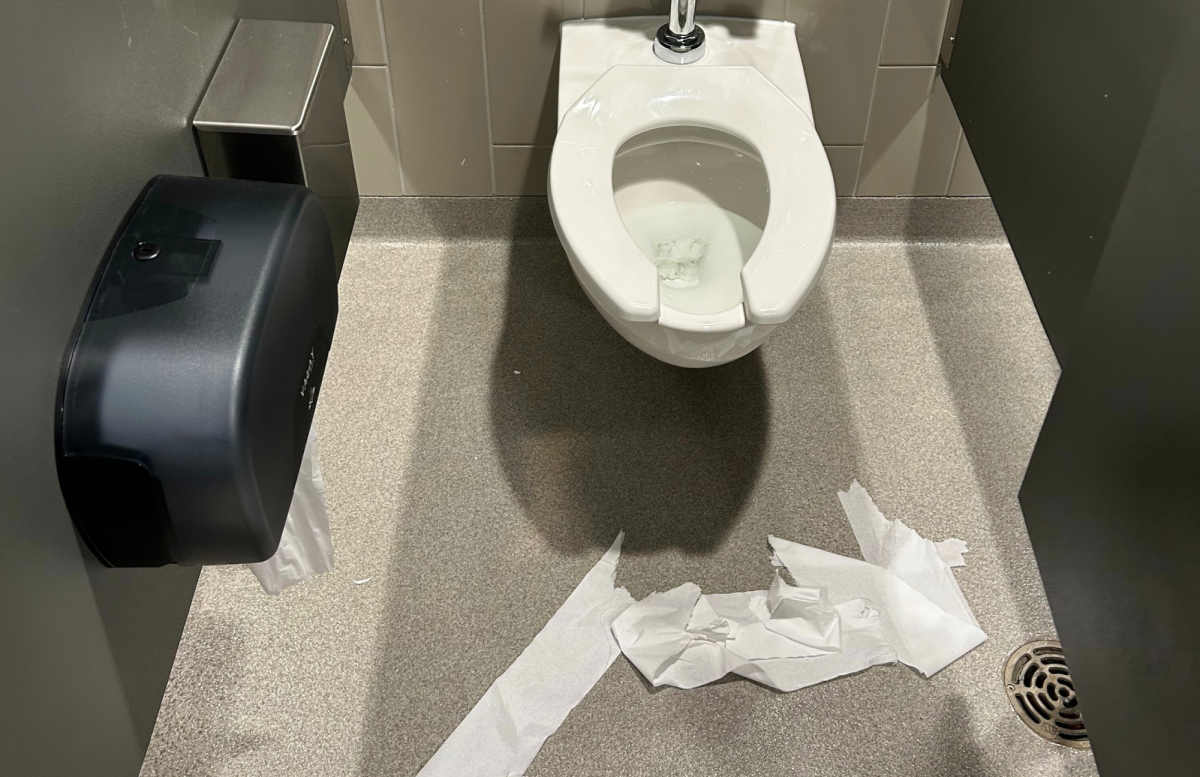
“So vaping in general is a problem. The industry is designed to make these devices that are easy to conceal that look like standard, normal kinds of things… So they’re designed, in my opinion, purposely to avoid detection and despite the marketing behind them, there are severe health consequences in doing them. I mean there’s no such thing as a ‘safe vape’. People think that it’s just flavored water and it really isn’t and some of them have marijuana or THC in it so essentially, the kids are bringing drugs onto school grounds, for which they could get suspended. There’s no good reason to have one from a health perspective, and it certainly isn’t healthy for anyone frankly to do it. Also, students are maybe making a choice that could prompt strong consequences again suspensions, removal from school, things that go on their permanent records, which nobody really wants. So specific to the bathrooms, obviously it’s a battle that we trust the students to go to the bathroom. We don’t search them, we trust that they’re going to go and they’re going to wash their hands and like come back to class like that’s what we expect everyone to do and the reality is the majority of students are doing the right thing. It’s a small group of students that are choosing to do this in the bathroom or wherever, which really affects the other students… so it’s not right that they have to have some anxiety in going to the bathroom fearful that the kid in the next stall is going to be vaping, and they’re going to be guilty by association like that’s not right but, that’s the reality that we’re facing sometimes when we find after the fact that somebody has done these things. So it’s frustrating certainly for the student to be accused of this and to be searched and then their parents notified and certainly is frustrating for them but it’s frustrating for us to have to do that obviously we have – and it’s not just Doherty, it’s all over the place, which doesn’t make it right, it makes it again all the more frustrating. Everywhere is facing challenges with vaping in the bathroom or whatever and kids flushing these devices down the toilet which are disposable, they clog up the toilets. For example, a couple weeks ago we’ve had plumbing issues because of vaping, flushing feminine products… We got hit with a close to a $12,000 bill only a couple weeks ago when we had to call plumbers out to unclog the leak which had backed up into the pipes which had backed up into the pipes, it created sewage problem so $12,000 that schools’ now out because of this so we need to address it and again, I don’t have a great handle on how to do it, the kids are fearful of detection so they take their hit they hear a noise, they flush the vapes. I’m still struggling and I’m looking – I’m working with students and staff and whomever to try to come up with a good answer to it, but it’s something that everyone is kind of facing.” – Mr. Staley, DMHS’s Principal.
Q : What are some inappropriate behaviors or trends students make in the bathrooms?
“So obviously kids will go in because it’s a private space and they can use the vape and do some inappropriate things because they have some level of privacy there. The challenge with the vapes again they create clouds, they create smell, like it draws attention whether they want it or not, so that certainly is an issue. Sometimes students will plan meet ups to go there. They may come from a different class… ‘Hey, get a pass at 9:30 and I’ll get a pass at 9:30 we’ll meet up in the bathroom’ and they do whatever they do. You know certainly that’s not what we want. So there are like systems in place that we don’t really want to have to go to. I know of some other schools that have a like an online pass system where kids on their Chromebook or whatever would say I need to use the bathroom and the computer would spit out when you’re allowed to go. It would monitor how many students are out of class at a time are in the hallways at a time or at the bathrooms at a time. The computer can know that you and your friend have caused problems before so like you two can’t have a pass at the same time. There are systems out there that I really don’t want to go to that would potentially tighten things up but, I would prefer to treat students as young adults by finding a common solution to this problem versus us having to manage it by being heavy handed – by using software, or using tools, or using polices that take away the ability for students to demonstrate responsible behavior.” – Mr. Staley, DMHS’s Principal.
Q : Can you give me some examples of products that should not be flushed down the toilet?
“Frankly, toilet paper, urine, feces, that’s all that should go down the toilet. What we’ve seen – what the examples we’ve seen, we’ve had to unclog vapes. We’ve had problems with students flushing feminine products – pads, tampons, and things like that – that they wrap up in toilet paper and then just flush. And again, I’m kind of approaching – that I’m kind of thinking that requires more education. I would like to not think students are doing that to be malicious or destructive but I really think it’s either a lack of education, because in some places around the world, you do just – for a lack of a better phrase – you flush it, you dispose of it in that way. There is then some maliciousness going on. Obviously everyone should know that vapes cannot be flushed. There was some random student who decided to flush a water bottle which again, cost $12,000 in damage. So, the reality is that if students maliciously cause damage and we find out who they are, that student will be on the hook for a $12,000 bill. So we have been charging students who have – not related to bathrooms – but we have had students who have caused damage to this school, and we have charged them for the repairs, this would certainly be a more costly version. So, there are severe consequences if we find out who these students are. But, for the most part, it seems like feminine products and vapes that tend to be the more common issues that we face.” – Mr. Staley, DMHS’s Principal.
Q : What are some steps taken after students vandalize or mistreat the bathrooms? Do you think they are doing it on purpose?
“The damage that we’ve seen, I don’t see how it could not be purposeful. We’ve had some issues with the doors being like taken off kilter or out of alignment and that really can only be caused by kids hanging on the door or swinging them so hard and banging them, that kind of thing. It’s designed to be sturdy so just like hanging your backpack on the hook while you’re in the stall that wouldn’t cause the damage that we’re seeing. We’ve had a couple instances where students were fooling around and play fighting, things like that, and bump into things and again cause damage. So like those you kind of have to think our purposeful whether they may be accidental, but they’re certainly not behaving appropriately and then causing these accidents. Again, if we identify who they are and we need to charge for repairs, then we do that. In a couple instances, the repairs were easy to fix so we make them because part of our philosophy is if – it’s a theory called a broken windows theory … The idea being is if anybody walks into a space that already has damage and they’re inclined to cause damage. If the space is already damaged, they feel like ‘oh well it’s already damaged I can cause more damage and like who’s going to care.’ The metaphor would be if you have like a building and there’s broken windows and, you know, ‘cuz kids have chucked rocks through the window, if those windows are still broken, the next kid walks by and sees a rock they may be inclined to do it because the mindset is ‘others have done it and there’s no punishment’ like they’re not really caring so ‘I’ll do it again’. So we do fix the damage as soon as we find it because we don’t want students to think ‘oh that bathroom is damaged so I can add more to that problem.’ We don’t want that to occur. However, it does strain out resources, it does cost money, it does take time. Some of these are not easy fixes – there just fixes that aren’t visible by students or staff frankly, because it’s done after school, behind the scenes… Then there’s again that financial cost that affects everybody, so there are challenges that occur with that but sometimes it’s too subtle for students to see – or staff. ” – Mr. Staley, DMHS’s Principal.
Want to learn more about the Broken Windows Theory? Click here !
Q : As a former science teacher, can you describe how the pipes can get clogged and how that impacts the sewage system?
“Sure. So I’m going to make some guesses here. I didn’t teach plumbing when I was teaching physics, but by talking and seeing what’s going on. Every time theres a leak, I get called to it so you ask enough questions and you kind of get it. So kind of what happens is we have a 6 story building essentially everything from the 6th floor, to the fifth, to the fourth, to the third – all the way down and it starts joining up into pipes at ultimately go out into the street and there’s separation between things that purely would just be liquids… Typically the bathrooms, though, have like a different plumbing that goes into it because there can be solid waste – poop – there can be solid waste that’s part of that. So those pipes again kind of all go down the challenges they don’t just go down like that’s I mean they go down but they also have to go horizontally… So like in a typical toilet… you flush, all of that goes down in a U, and the force of that flush forces that the pressure of that flush forces all of the waste down the U, up the U and then like down into the system and that’s then replaced by clean water… What that means is there’s all these connections, like it’s not like one pipe that’s nice and smooth. It’s all these pipes that have to connect… There could be like a some like jagged edges or like raggedy edges, there could be corners, or there could be edges where two pipes intersect – that creates places where things can get lodged. Simply kind of what you can think of happening is if somebody flushes a thing, it’ll just go through, but sometimes you can catch on like if someone flushes a tampon down that’s got some absorbent materials. It’s cloth-y and it’s kind of whatever, sometimes it can catch and gets there and then that is a place where the next thing can catch and get caught on and the next thing so it starts to build up over time and then that creates a blockage, so there’s more stuff comes down and it gets trapped there it creates a blockage and then you can just imagine that’s going to everything that keeps flushing can only comes then go up the system.” – Mr. Staley, DMHS’s Principal.
Q : Is there anything else you’d like to share?
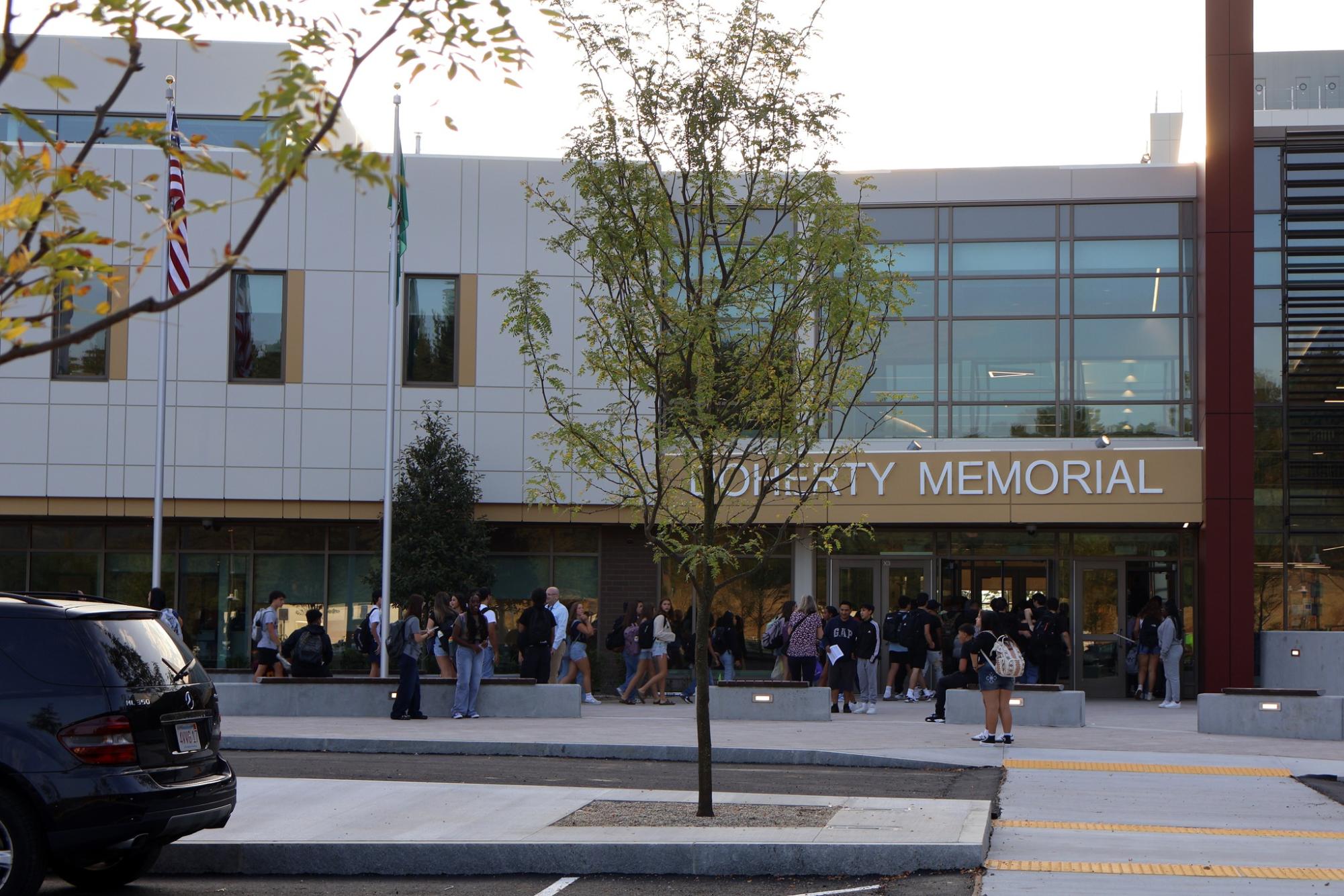
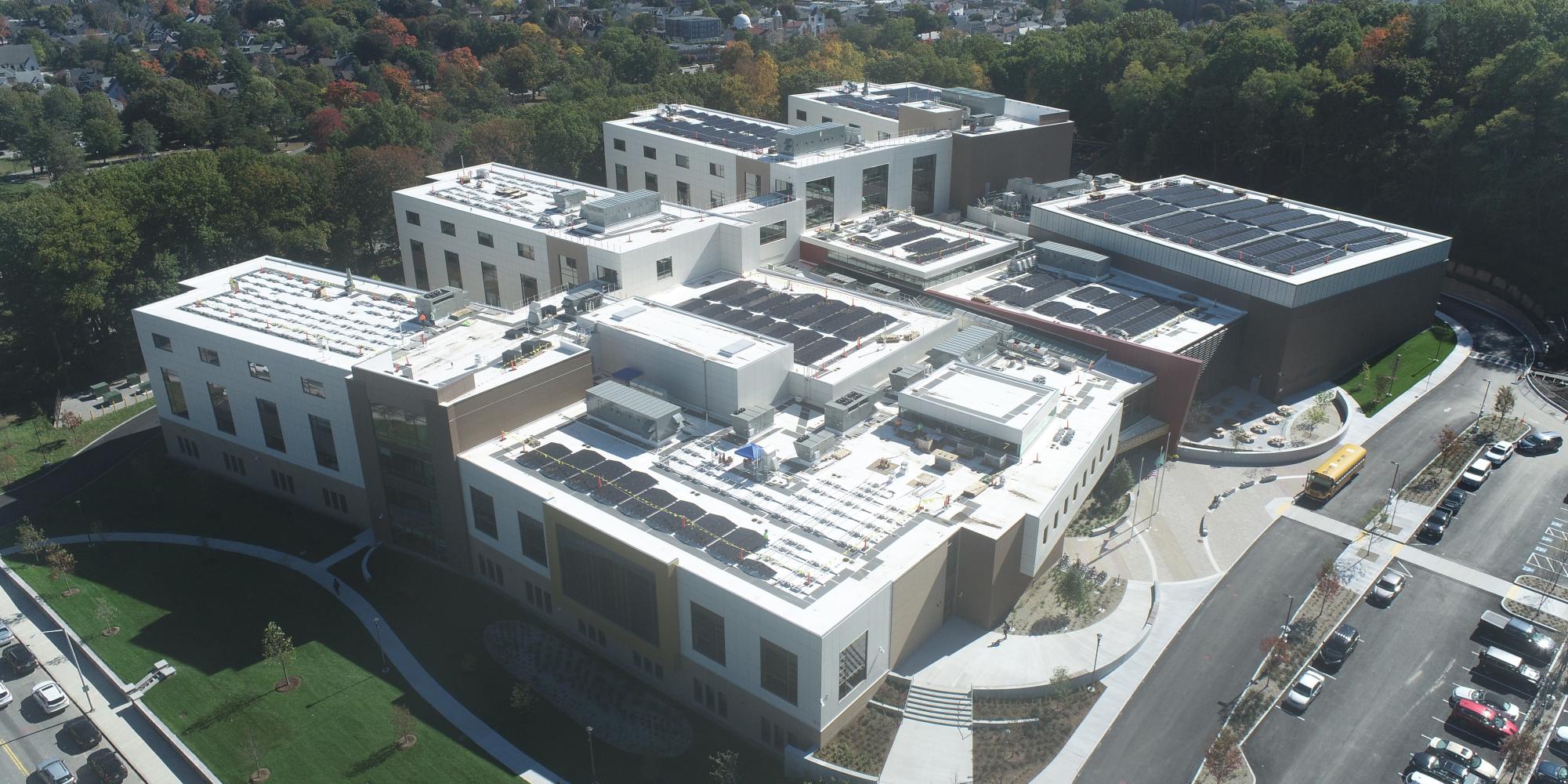
“I think everyone wants to take care of the school that they’re in. I think there’s an immense level of pride that we all have in this school. The reality is we are fortunate to be able to come to a place like this – a brand new building that was over $300 million that the taxpayer supported, that the state supported, that the city supported. We’re fortunate to do that. Not every student in this city has a building like ours in which to come to school so, we clearly then want to take care of our investment because this has to last a long time and we collectively should have pride in what we do, and it’s embarrassing when some don’t demonstrate that kind of behavior. I am more than willing to meet with students who have ideas about how to improve things so in this example, you know, regards to the bathroom security, I’m more than happy to meet with students who have ideas. Not every idea is feasible, but I’m more than happy to meet and hear the frustration here, hear their suggestions for improvement and our ultimate goal is for students to feel comfortable. I want students to feel comfortable coming to school, being in class, going to the bathroom, and going to lunch. I want students to feel comfortable in the environment in which they ran for 7 hours a day. That requires everyone to do their part – staff, students, custodians, clerks, admin – like whomever, it takes everyone to do their job and if there’s room for improvements in some of those places, I’m happy to have that conversation.” – Mr. Staley, DMHS’s Principal.