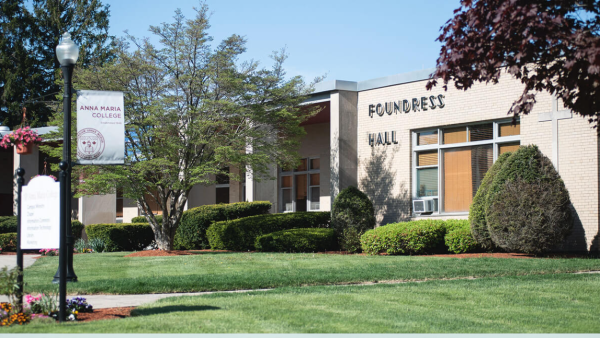



























Anna Maria College in Paxton will close at the end of 2026, bringing an 80-year history to a close. The announcement, made on April 23, stated that the college will stop academic operations after the Spring 2026 semester and complete its full closure by the end of the calendar year.
According to the Board of Trustees, the decision came after a thorough review of the college’s financial condition, as well as wider challenges facing higher education. Even after multiple attempts to stabilize the school’s operations, officials determined that there were not enough resources to continue supporting students or meeting required standards. In a message to the campus community, President Sean J. Ryan and Board Chair David P. Trainor recognized that the announcement would be difficult. They noted that students, faculty, and alumni may experience frustration or sadness, and they committed to clear communication throughout the transition. They also reaffirmed the college’s long-standing mission of using education to make a meaningful impact on students’ lives.
The decision follows months of collaboration with the Massachusetts Department of Higher Education, which had already pointed to financial strain at the college. Like many small, tuition-dependent institutions, Anna Maria has faced ongoing challenges in recent years, including declining enrollment and increasing costs after the pandemic. Experts have also warned about an approaching “enrollment cliff,” referring to a drop in the number of college-aged students due to lower birth rates. This shift has made it increasingly difficult for smaller colleges to maintain steady enrollment and financial stability.
President Ryan, who took office in July 2025, introduced several measures aimed at improving the college’s financial outlook. These efforts included cutting more than $2 million in operating expenses, revising enrollment targets, and exploring new sources of revenue. The college did report some positive signs, such as a 7.5 percent rise in spring enrollment, strong fundraising performance, and a $5 million gift from an anonymous donor. Despite this progress, significant financial concerns remained. A recent audit raised serious doubts about the college’s ability to continue operating, which resulted in restrictions on federal financial aid. After working closely with state officials and accreditation agencies, the college ultimately concluded that closure was the only viable path forward.
The shutdown will also bring an end to the college’s athletic programs, which have long been a central part of campus life. Anna Maria’s teams, particularly its football program, built a strong reputation in recent years for their competitiveness and steady improvement. The football team drew consistent attention for its performances and helped bring school spirit to campus, making its loss especially difficult for student athletes and fans alike. With the closure, all athletic programs will be discontinued, marking the end of an era for Amcat sports.

To support students, the administration has put plans in place to help them complete their degrees. Seniors will still graduate as scheduled on May 9, while other students will be able to transfer to partner institutions such as Worcester State University, Regis College, Springfield College, Bay Path University, and Fitchburg State University. Additional transfer partnerships are expected to be announced. The college will also organize transfer fairs to connect students directly with representatives from these schools. Academic records will remain accessible through a partner organization, ensuring that students and alumni can obtain transcripts and verify their degrees in the future.
As the college prepares to close, most faculty and staff positions will end by June 2026. Anna Maria College, founded in 1946 by the Sisters of St. Anne, was originally established to expand access to higher education, particularly for women with limited financial means. Over time, it grew into a coeducational institution offering a wide range of programs, including nursing, education, business, and criminal justice.
While the campus itself will soon shut down, college leaders believe its legacy will continue through its graduates. For many in the Paxton community, the closure represents the loss of a long-standing and meaningful local institution.