














Black History Month
Every February in the U.S. and Canada, we honor and remember important people and events in African-American history and the Black community. It has expanded in a meaningful celebration of heritage, achievement, and the ongoing pursuit of social justice and equality today. Many artists around this time tend to use their work to highlight the division in today’s society, powerful themes, or even the tenderness between loved ones. One piece of artwork that relates to this significant month of the year is Kerry James Marshall’s Vignette Collection.
Who is Maya Angelou?
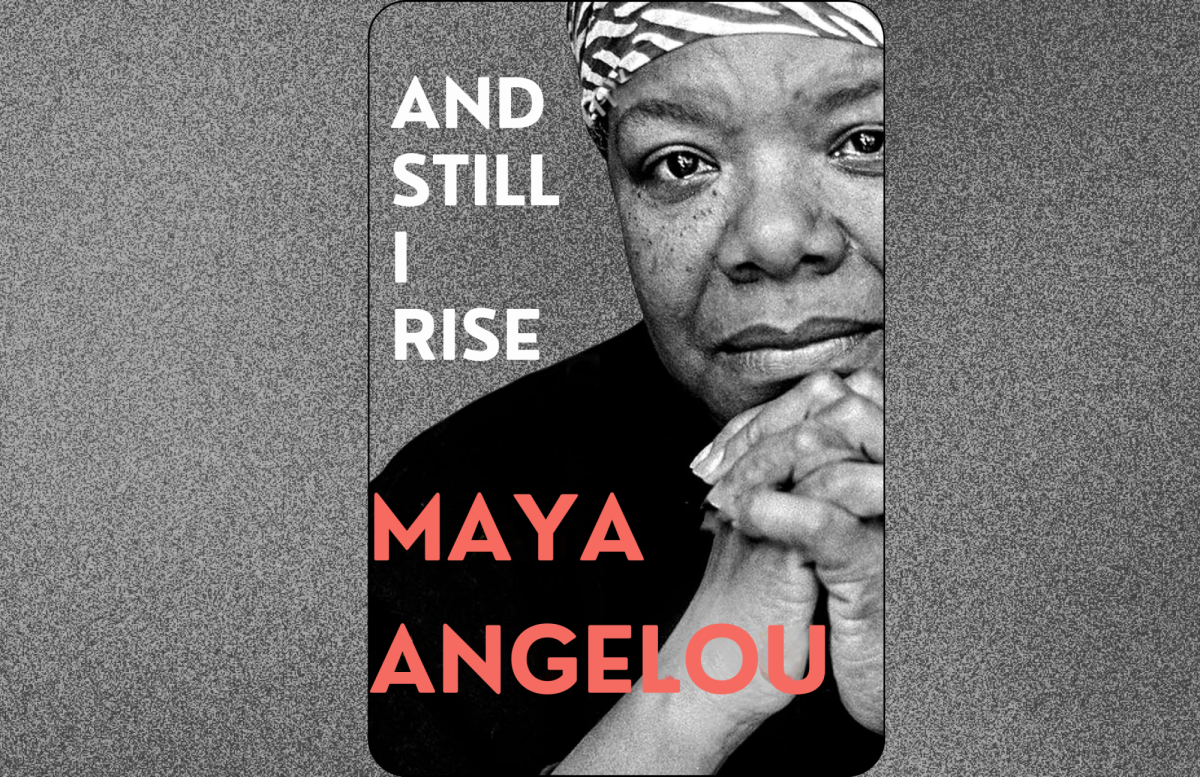
Angelou, born Marguerite Annie Johnson, was born on April 4, 1928 in St. Louis, Missouri. She was an American memoirist, essayist, poet, dancer, singer, scholar, world-famous author, and a civil rights activist. Throughout her lifetime, she published seven autobiographies, and is credited with a list of plays, movies, and television shows in a span of over 50 years. Receiving more than 50 honorary degrees, dozens of awards, she became known for her unique and pioneering autobiographical writing style that challenged and expanded the genre. There have also been attempts made to ban her books from some U.S. libraries. Read along to one of her world famous poems, And Still I Rise, her third volume of poetry published in 1978.

And Still I Rise is made up of 32 short poems, divided into 3 parts. Part One, is titled “Touch Me, Life, Not Softly.” Part Two is titled “Traveling.” Finally, Part Three is titled “And Still I Rise,” which gets its name from the volume’s title poem. Themes include focusing on hopeful determination to rise above difficulty and discouragement, love, loneliness, South racism, nature of women, importance of family, influenced by her own trauma and life experiences.
Still I Rise
By Maya Angelou
You may write me down in history
With your bitter, twisted lies,
You may trod me in the very dirt
But still, like dust, I’ll rise.Does my sassiness upset you?
Why are you beset with gloom?
’Cause I walk like I’ve got oil wells
Pumping in my living room.Just like moons and like suns,
With the certainty of tides,
Just like hopes springing high,
Still I’ll rise.Did you want to see me broken?
Bowed head and lowered eyes?
Shoulders falling down like teardrops,
Weakened by my soulful cries?Does my haughtiness offend you?
Don’t you take it awful hard
’Cause I laugh like I’ve got gold mines
Diggin’ in my own backyard.You may shoot me with your words,
You may cut me with your eyes,
You may kill me with your hatefulness,
But still, like air, I’ll rise.Does my sexiness upset you?
Does it come as a surprise
That I dance like I’ve got diamonds
At the meeting of my thighs?Out of the huts of history’s shame
I rise
Up from a past that’s rooted in pain
I rise
I’m a black ocean, leaping and wide,
Welling and swelling I bear in the tide.Leaving behind nights of terror and fear
I rise
Into a daybreak that’s wondrously clear
I rise
Bringing the gifts that my ancestors gave,
I am the dream and the hope of the slave.
I rise
I rise
I rise.
The poem says that no matter how people try to hurt or silence her, she will always rise again. It’s about courage, confidence, and refusing to be broken. It also connects to Black History Month because it celebrates the strength, resilience, and hope of Black people throughout history. After reading Angelou’s poem, what can you take away from it? Is there any themes, topics, or certain lines or stanzas that stood out to you the most? Are you now inspired to write your poem–whether it’s about your own personal experiences in life, a certain observance-month, or a topic you’re interested in? Feel free to leave your thoughts by clicking the comment button on your right-hand side, or scroll below. Stay tuned for more Black History Month related articles!
Sources: