










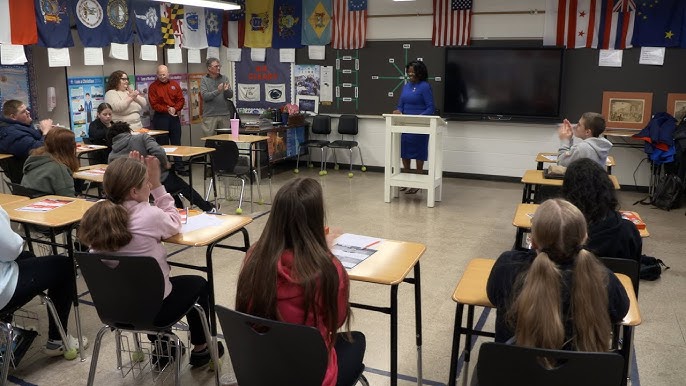




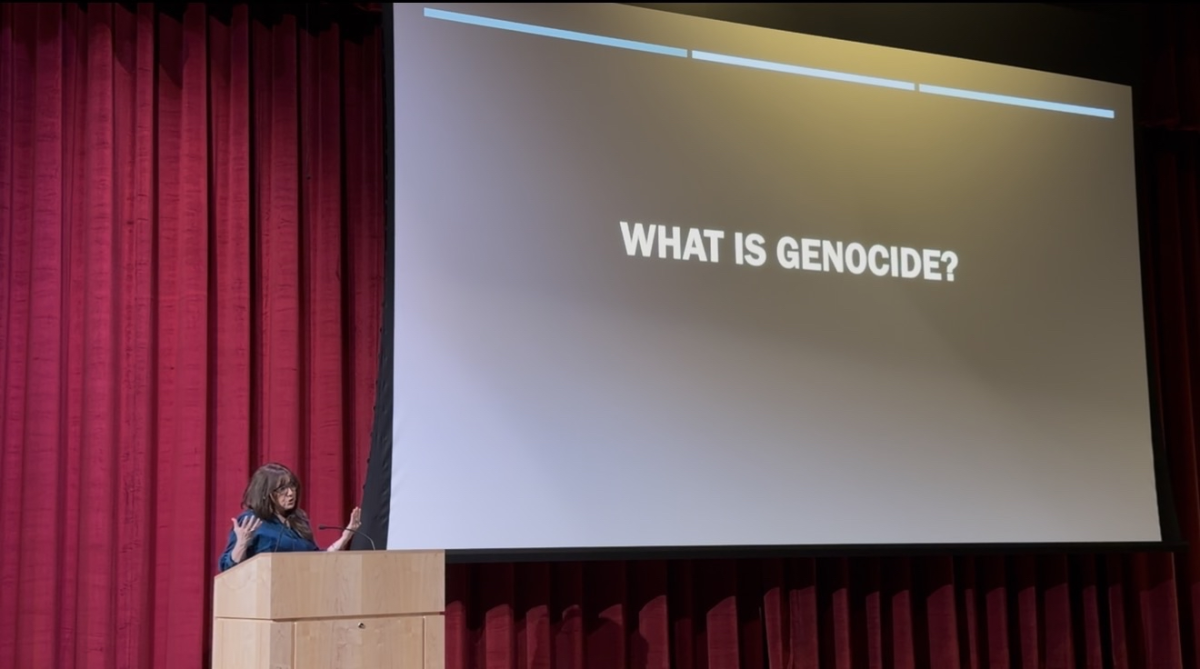
Here at Doherty our 9th grade students had the opportunity to attend an amazing presentation by Dr. Elyse Semerdjian, a renowed social historian specializing in the Ottoman Empire, the Armeniam Genocide, and gender studies in the Middle East. Dr. Semerdjian teaches about Genocide and the Holocaust for Holocaust and Genocide Studies. And as Dr. Semerdjian spoke to them she discussed the history of Genocide connecting it to the Holocaust and the Armenian Genocide.
What is Genocide?
Dr. Semerdjian explained to us what Genocide meant and the meaning behind it. This word was created by Raphael Lemkin, a Polish lawyer who lived from 1900 to 1959. Lemkin coined the word Genocide and called it “A crime without a name” after the Armenian Genocide. He has lost 19 family members during the Holocaust. Lemkin was also fighting hard to create the Genocide Convention. She also brings up a hard question: if someone kills a mass murderer (like Talat Pasha), are they still considered a murduer? This makes you really stop and think.
The Comparison
She compares both the Holocaust (also called Shoah) and the Armenian Genocide. These both all started with propaganda such as newspapers, films, books and other things making the killing seem innocent. The Holocaust had begun in 1933 which was when the law had taken away all Jew’s rights. In the Armenian Genocide, Armenians were literally forced to go on a walk until they died. Women and men were separated and even the priests and nuns! These people were also put on barges (flat-bottomed boats), starved and let’s not forget, killed. Over time the concentration camps have turned into a living nightmare becoming worse and worse, eventually ending up like Auschwitz. There were also other events that occurred that were not even heard of but these were the two most heard of and horrifying.
There is More Than Just the Violence
When being educated on Genocide we learned that it does not always have to mean killing or shooting lots of people. By just starving, splitting up families, and ripping people away from their homes is just another form of Genocide. It’s more like trying to destroy a whole bunch of people even if you are not killing them.
Real Talk
Let’s not forget this was real people with real emotions. Aurora Mardiganian was 15 years old when the Armenian Genocide happened. She has to go through her past all over again when she acts in a silent film, but this just hurt and silenced her. Americans at the time knew what was going on and they tried helping out. Dr. Semerdjian shows a short clip of the silent film Ravished Armenia (1919).
The Horror
She also talked about the survivors that stayed quiet because the pain they bore was too much. Later on some were experiencing “post memory,” they are carrying some sort of trauma even though they did not experience it. Dr. Semerdjian brings up the book Maus, where the Germans were called cats and Jews as mice. Armenians were sometimes called cancer, something that cannot be cut out. The pictures and the motifs make this horrifying historical event even easier to understand. This also shows how the propaganda just objectified people.
Denial
Denial is still a problem. For years people did not want to talk about the Holocaust, and the same thing happened with the Armenian Genocide no one wanted to talk. Dr. Semerdjian reminds us that we face the trauma and really pay attention to these stories that are told. She really cares about making students grasp the powerful idea of remembering our history and why it matters.
This impactful talk left everyone thinking about this topic and wanting to hear more. Dr. Semerdjian did such an amazing job explaining and going into detail about these hard topics in an understanding and powerful way! It showed why we need to study these hard topics of history. From learning about these topics it shows us what are the signs of propaganda or people’s rights being stripped from them, so we can prevent anything like that from ever happening again.
Having Dr. Semerdjian coming to Doherty was really fun. She is an empowering woman and does very important work in a field that needs more people like her. We should have more women teaching and studying genocide and the Holocaust history. When we have women like Dr. Semerdjian share their knowledge it makes a huge impact on how we see these stories in new ways.
If you missed this awesome talk by Dr. Semerdjian, don’t be afraid to ask your friends about it. Talks like this don’t normally happen everyday here at Doherty. They make you want to learn more about history and why it matters.